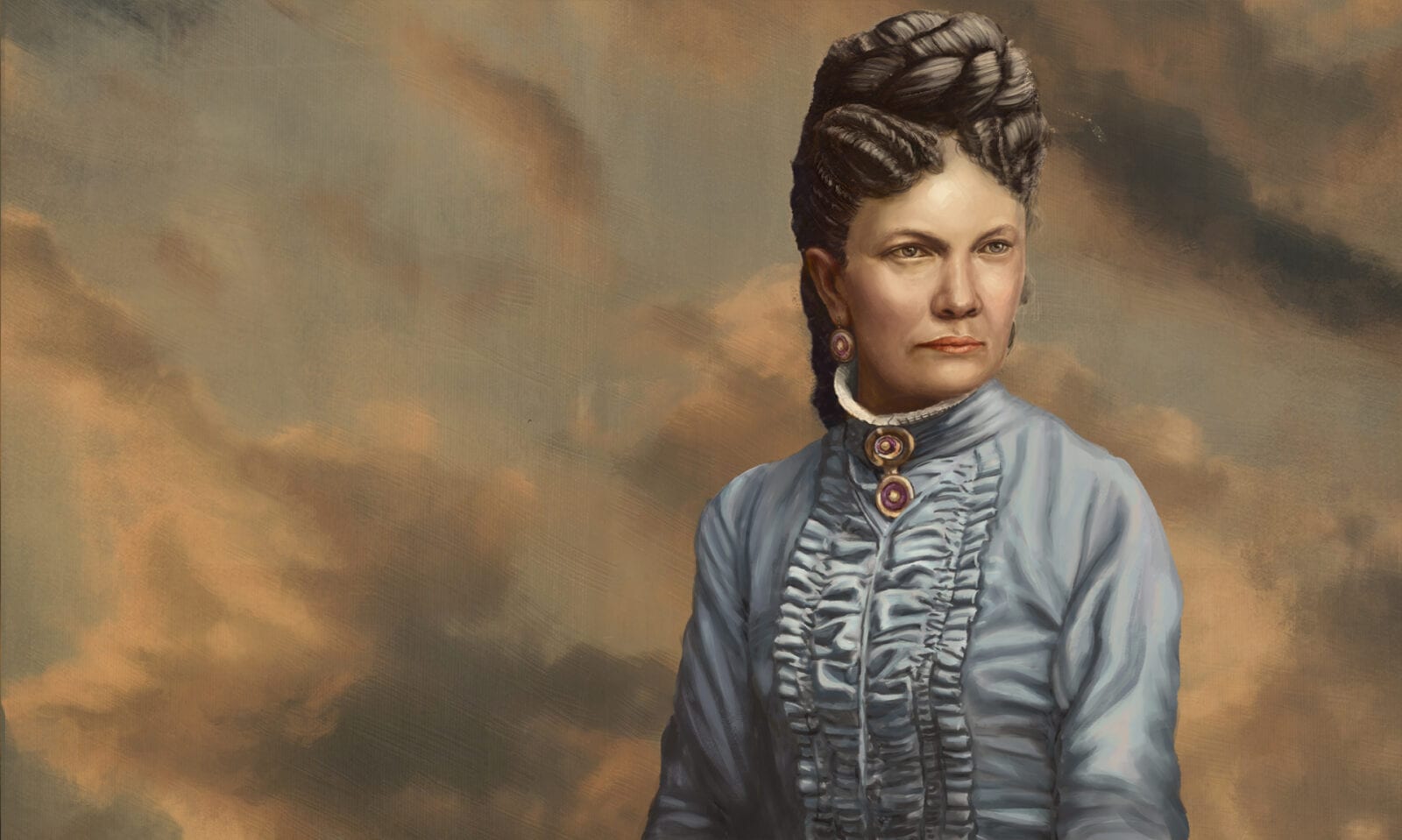
Zofia Horwatt-Tyszkiewicz: The Woman Who Held the Counts' World Together
Aristocrats are usually spoken of through their estates, titles, and wealth. Men are defined by their decisions, careers, and political conflicts. Yet there are biographies that cannot be understood merely through a surname or a coat of arms. Zofia Horwatt-Tyszkiewicz was precisely such a figure. She was not just the count's wife, nor merely the family's "moral backdrop." She was the structure. The axis. The woman who held together not only the family, but an immense system of estates, people, hospitals, shelters, and decision-making.
Zofia was born in 1837 into the Horwatt family—an old noble family of the Grand Duchy of Lithuania with Hungarian origins, whose roots in Lithuania traced back to the 16th century, during the reign of Stephen Báthory. This was a family that, for several generations, had lived not in the romantic realm of legends, but in the practical, everyday reality of administration, service, and responsibility. Zofia's father, Aleksander Horwatt—a longtime Marshal of the Nobility of the Kiev Governorate—was a man accustomed to making decisions and maintaining order. Her mother, Klotylda Wołodkowicz-Tyszkiewicz, was a deeply religious woman who valued inner discipline, instilling in her children not a demonstrative piety, but a quiet sense of duty.
A Childhood That Taught Responsibility Over Emotion
Zofia was the youngest in the family. She grew up alongside her older brothers and sisters, sharing an especially close bond with her sister Jadwiga. It was a home where education and spirituality were not at odds. The children were taught by hired governesses and tutors, but their mother personally oversaw their upbringing—focusing not just on knowledge, but on character. Zofia was raised in an environment where emotions were not suppressed, yet they were never allowed to dictate one's life.
Even in her youth, she saw Europe. In 1857–1858, traveling with her parents and sister, she visited Germany, Switzerland, France, Italy, and Poland, and spent time in Budapest. This journey was far from superficial—it produced a diary that has survived to this day. This is a crucial detail. It reveals not only Zofia's curiosity but also her capacity to reflect, observe, and think through writing. She was not merely a spectator; she documented the world, striving to understand it.
From the Horwatt Home to Imperial-Scale Responsibility
In 1860, Zofia married Józef Tyszkiewicz, an officer of the Russian Empire and adjutant to the Governor-General of Vilnius. This was not a light, romantic marriage. Józef was already a mature man with a complex biography, an established career, health issues, and immense ambitions. Zofia became his wife at just twenty-three, but very quickly she became an integral part not only of the family but of an estate network on an imperial scale.
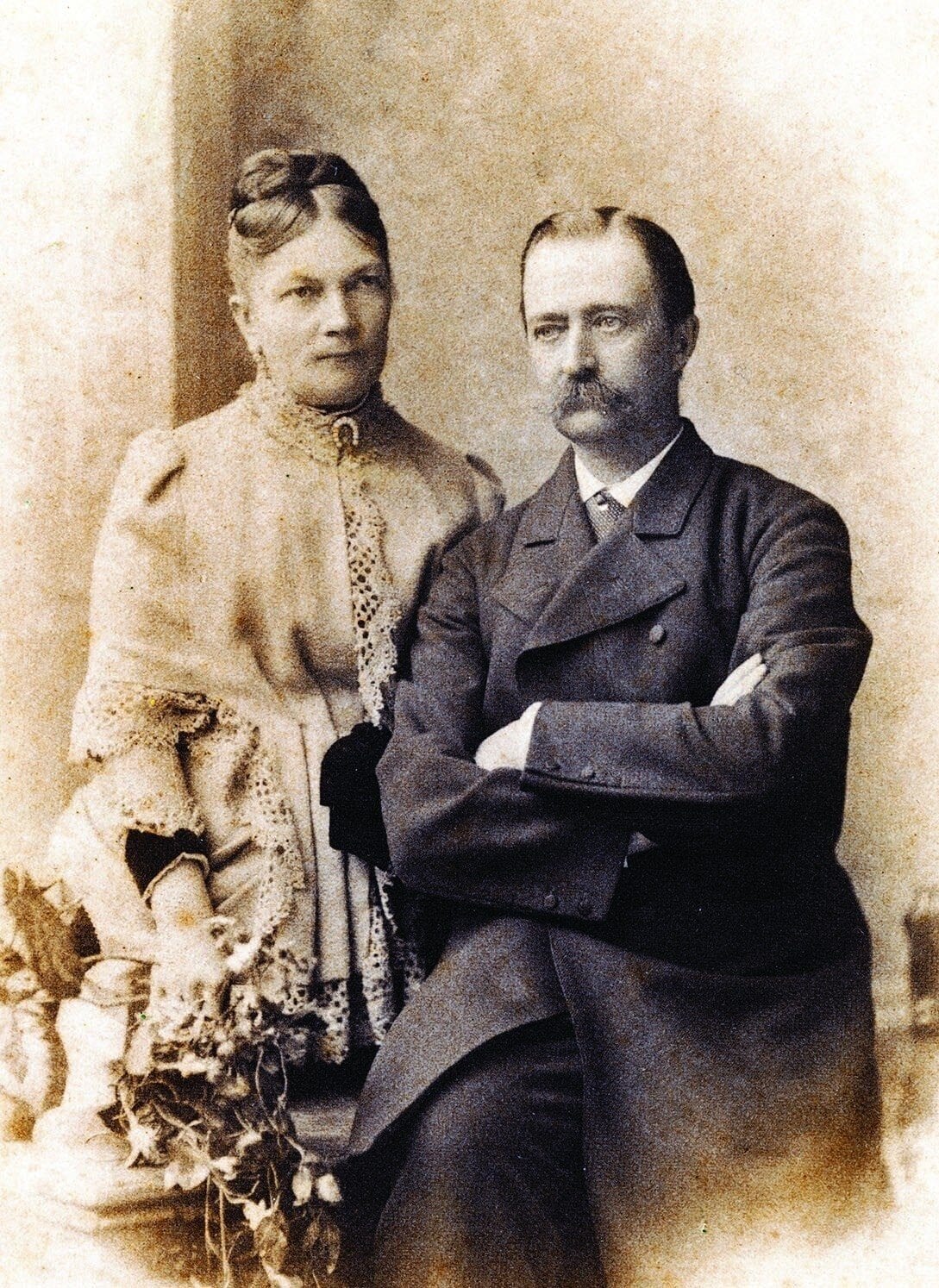
Initially, they lived in Vilnius, in a palace on Trakų Street that belonged to Zofia. Later, they moved to Lentvaris Manor—not yet the legendary neo-Gothic estate, but an early, developing manor. Finally, in 1875, Kretinga became their primary residence. Over these years, Zofia gave birth to twelve children. Eight of them survived to adulthood. Four died in infancy or very early childhood. Today, these statistics might just look like numbers, but at the time, they represented constant internal tension, profound loss, and a quiet mourning that had to be endured without letting it paralyze her life.
Zofia raised more than just her own children. She also accepted three of her husband's illegitimate children, whom the family adopted. They received the Tyszkiewicz surname but did not inherit the count's title or succession rights. This speaks volumes about her moral fortitude. She did not seek revenge, she did not fracture the family, nor did she try to "erase" an uncomfortable reality. She managed it. Calmly, without grand declarations, but with absolute clarity.
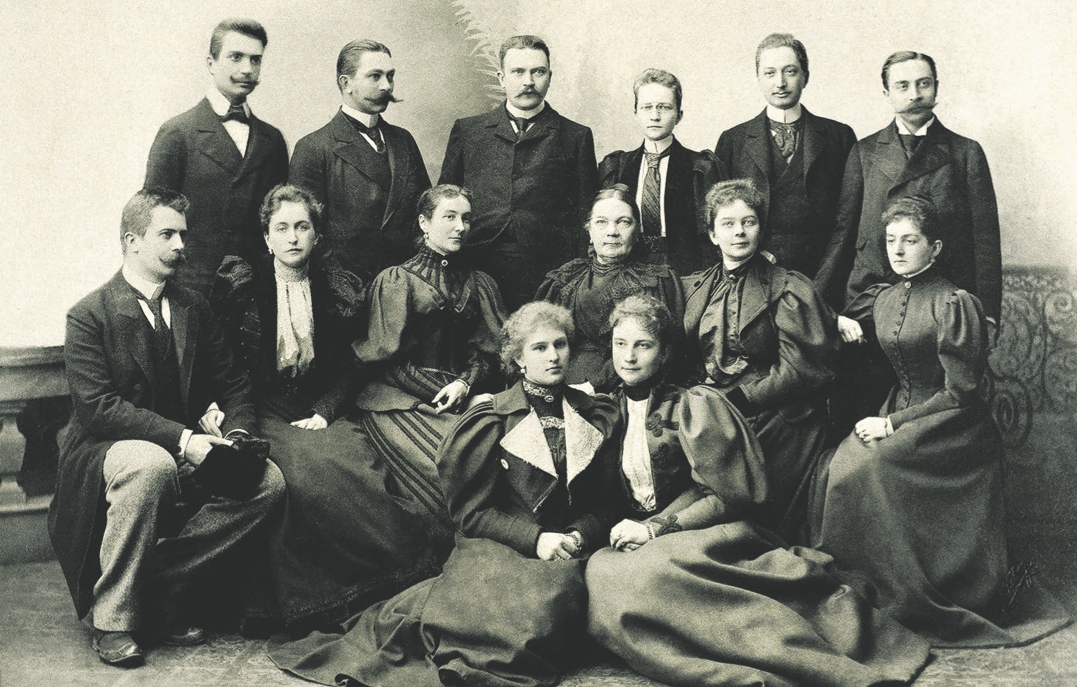
When her husband fell ill—and for the last ten years of his life, he was severely ill—Zofia became his nurse. When he was away on duty, she became the administrator. When he governed one of the wealthiest landownership networks in Lithuania, encompassing 27 estates and around 400,000 hectares of land across four governorates, Zofia became the de facto coordinator of this vast system. This was no symbolic role. It meant daily decisions, overseeing estate managers, supervising finances, and handling people's problems, illnesses, harvests, and conflicts.
When Charity Becomes a System, and Strength an Everyday Reality
And yet, Zofia distinguished herself most not through administrative power, but through philanthropy. At the Kretinga estate, next to the hospital built by her husband, she established an asylum for orphans, the elderly, and the disabled. She supported beggars and the destitute not sporadically, but systematically. She taught her daughters to visit the children of impoverished families, to teach them to read, and to sew clothes for them. This was not a mere "act of kindness." It was a worldview.
She supported churches—in Salantai and Kretinga—not for the sake of appearances, but as community centers. She managed the estates' agriculture not merely for profit, but for stability. Even after her husband's death in 1891, she mourned him for the rest of her life—wearing dark clothes and a widow's veil, and praying for him daily. This was not a posture. It was her profound inner stance.
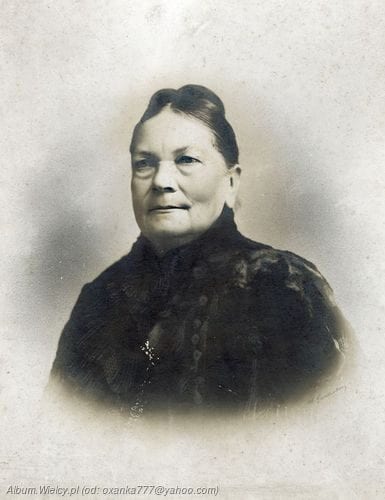
In her later years, Zofia managed the Dimitravas, Darbėnai, and Grūšlaukė estates, dividing her time between Kretinga and Palanga. She spent her winters in Kretinga, where she had her own apartments with direct access to the Winter Garden through a grotto. In the summers, she lived in Palanga, at the "Anapilis" villa or at the estate of her son Feliks. It was a quiet, but by no means passive, life.
Zofia died in 1919 at the age of 82. She was buried in the crypt of the Tyszkiewicz chapel-mausoleum in Kretinga, resting beside her husband in an ornate sarcophagus. Yet even in death, her story was not left in peace—in the mid-20th century, grave robbers desecrated the crypt and damaged the sarcophagi. It was only in the 21st century, during restoration work, that her remains were moved, examined, and identified, while the sarcophagi were restored and returned to their rightful place.
The investigations revealed even the smallest details: Zofia was 165 cm tall, and her wedding ring, bearing a Polish inscription and her wedding date, was found in the coffin. This is deeply symbolic. After all the properties, hospitals, children, estates, and hundreds of decisions—what remained was a ring. A personal, quiet testament.
Zofia Horwatt-Tyszkiewicz was not the "backdrop" of history. She was its framework. A woman who disliked noise, yet held a world together. And it is precisely such figures who often go unnoticed—until you start looking deeper. If today we speak of the Tyszkiewicz estates, their survival, their structure, and their social fabric, a very large part of that legacy leads back to a single name: Zofia.