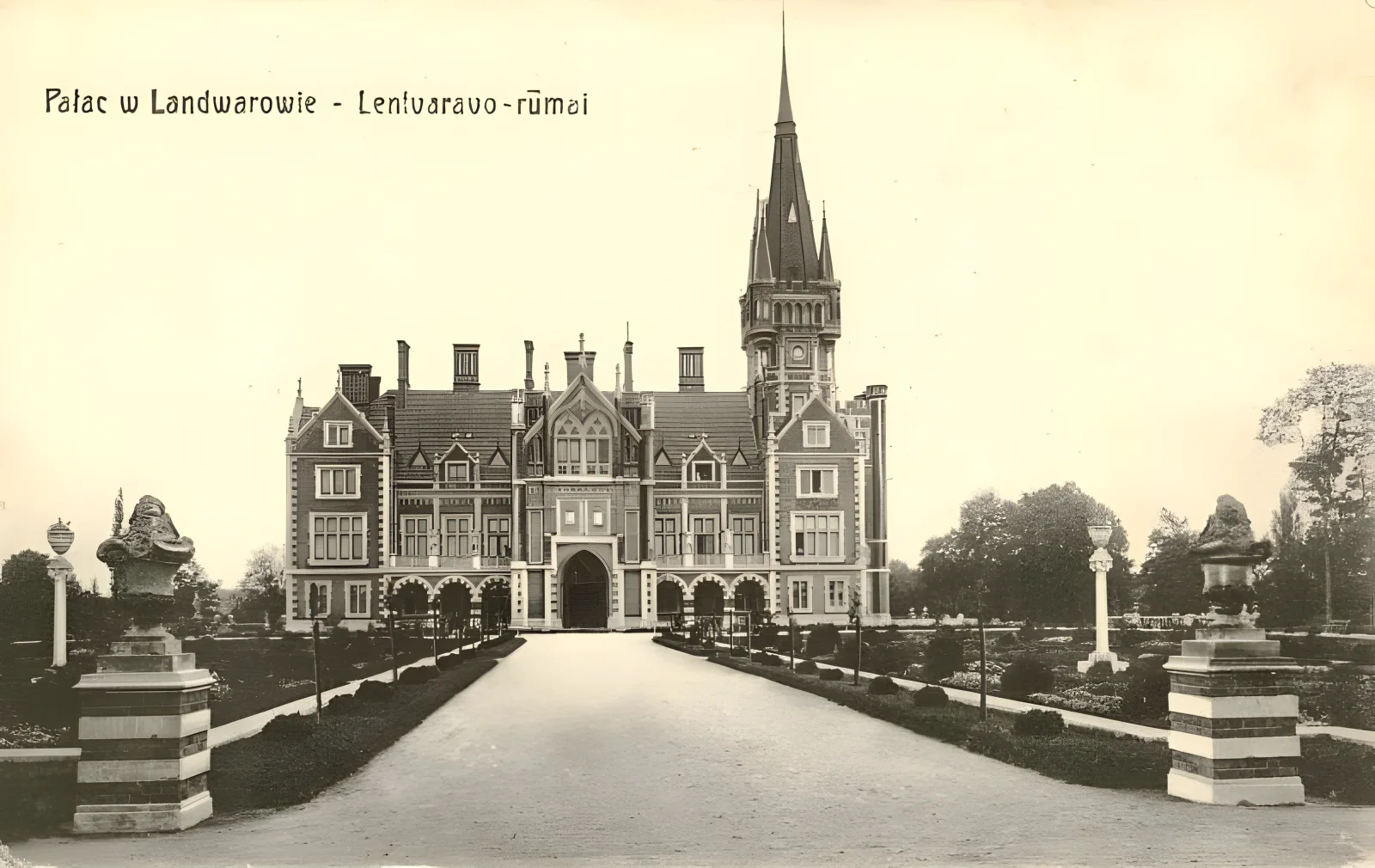
The Journey of Lentvaris Manor: Grandeur, Decline, and the Quest for Revival
The era of manors in Lithuania has long since passed. Today, most of them are living a second, often vastly different life: some have been converted into museums or handed over to state institutions, others meticulously restored, and still others left abandoned, quietly fading away. Yet, the story of Lentvaris Manor stands out. It is not merely about architecture or heritage, but also about attitudes toward finances, investments, and the responsibility for what is left behind for future generations.
During the Soviet era, Lentvaris Manor housed the administration of the Lentvaris Carpet Factory—a functional period, yet entirely alien to the spirit of the estate. Following independence, the manor remained without a clear direction for some time, until businessman Laimutis Pinkevičius became its owner in 2007. At the time, he declared his ambition to take up residence in the manor and breathe new life into it. Several million litas were invested in the project—an amount sufficient to host a spectacular wedding against the backdrop of the estate (local children even speculated whether this marked the return of the Tyszkiewicz family) and to conduct crucial architectural research.
This research was both essential and costly, as authentic photographs of the interior of Lentvaris Manor are exceedingly rare. Unfortunately, the vision was never realized. Over the course of nine years, the manor suffered multiple acts of vandalism, was left neglected, and the fines imposed were merely symbolic. Ultimately, Lentvaris Manor was sold at auction.
Today, the estate has a new owner—businessman Ugnius Kiguolis, whose goal is not to create just another formal museum, but a contemporary, vibrant cultural space. His vision encompasses a museum, a hotel, a café, an art incubator, and various educational and cultural activities. Most importantly, there is a genuine commitment to restoring authenticity in practice, rather than just in theory. It is already known that six sets of the manor's original doors are preserved in a Warsaw museum, while in another museum space in Poland, sculptures of the four winds—which historically belonged to the terraces of Lentvaris Manor—are mounted on a fence.
A sum of 673,000 euros from the European Union structural funds has already been allocated for these works, while the remaining amount—approximately 6.5 million euros—will need to be covered by state and private funds. It is an ambitious, yet clearly structured plan.
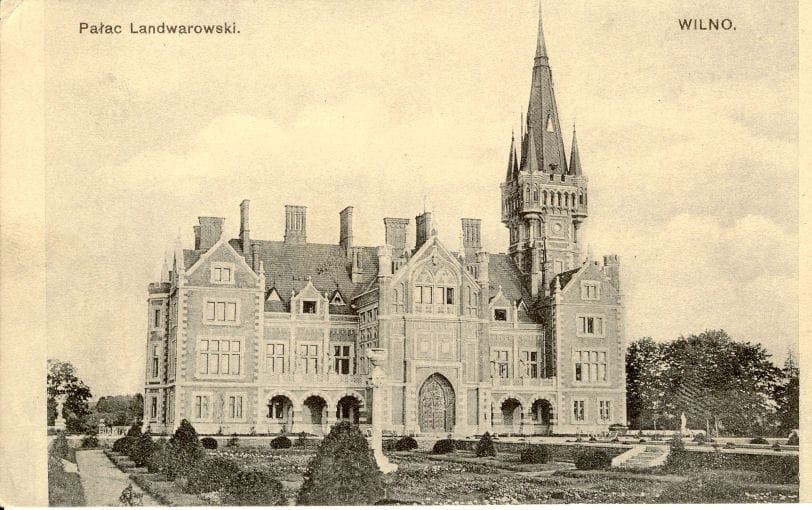
If this vision is realized, it is safe to say that it would closely align with the spirit of the estate's former owners—the Tyszkiewicz family. This is especially true of Vladislovas Tyszkiewicz, who shaped the magnificent face of Lentvaris Manor at the end of the 19th century. It was through his initiative and funding that the manor was reconstructed in the English Gothic style, and the renowned French landscape architect Édouard François André was invited to design the park. The park became not only an aesthetic centerpiece but also a social hub, even featuring a public café. This was the true golden age of the estate.
At that time, Lentvaris Manor was not a closed, elitist world. On the contrary, it was open and organically connected to the surrounding community. The generosity of Vladislovas Tyszkiewicz became legendary: it is said that he never refused to give alms, reaching into his pocket without hesitation, even when he suspected deceit. Yet, alongside this spontaneous kindness, there was also focused philanthropic work. In 1907, he founded the Vilnius Society of the Museum of Science and Art, whose goal was to collect and preserve artistic and scientific heritage.
Together with his brother Antanas, Vladislovas donated a large portion of his personal collections to the museum, actively seeking out new exhibits and sponsors. Letters from that period to Tadas Vrublevskis reveal that the society's membership fee was 50 rubles a year, with an annual commitment of as much as 500 rubles in cash or exhibits. Today, this sum would be equivalent to roughly eight average salaries in Lithuania—giving us an understanding of the scale of investments that were considered a matter of course.
Over more than a century, Lentvaris Manor has changed radically. From a center of generosity and culture, it became an object of disputes, speculation, and financial interests. However, current investments offer hope that the estate may once again become what it used to be—a vibrant, open, and meaningful space.
If history repeats itself, Lentvaris Manor has the chance to do so not as a mere replica, but as a modern interpretation of the very same principle: that wealth and culture are not opposites, and that responsibility and vision are the foundation of enduring value.