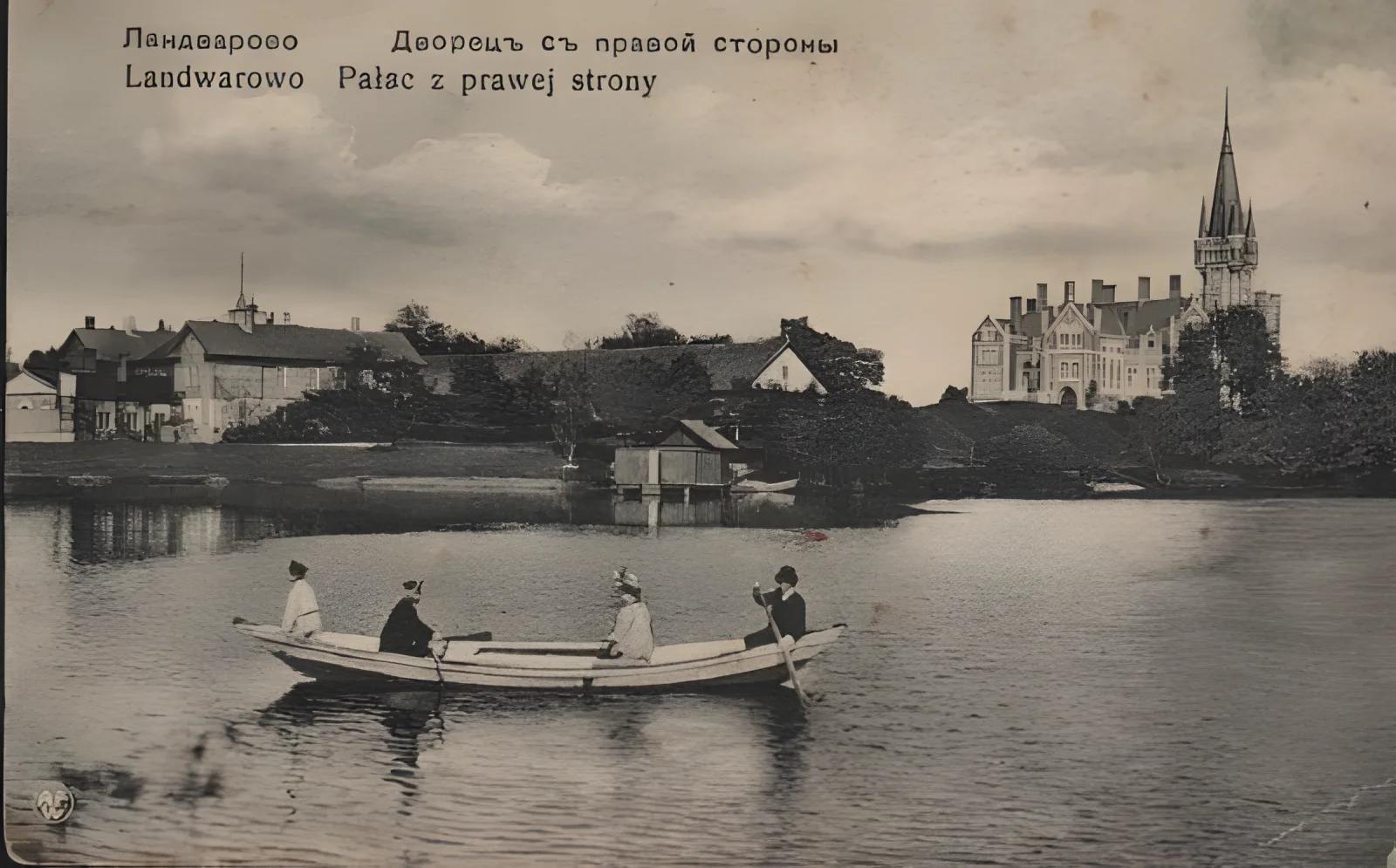
Lentvaris: A Name Born of Defense, Fire, and Forgotten Memory
Can a city's name be older than the city itself? Can a place name survive for centuries, even after the people who understood its meaning are gone? The case of Lentvaris allows us to answer these questions not with guesswork, but through history, archaeology, and ancient texts. This is the story of a place that existed long before the manor, the city, or the factories—and whose name might have meant not materials, but the duty to defend the land.
Popular Legends and Convenient Explanations
Many residents of Lentvaris have heard, at least once, a simple and appealing theory: Lentvaris comes from the Lithuanian words lenta (board) and varis (copper). The associations arise naturally: nails, wire, metal, and later—factories, industry, a working-class town. This version is convenient because it aligns perfectly with the 19th and 20th-century history of Lentvaris, when metal-related crafts and industrial enterprises flourished here.
Another equally common theory stems from linguistic memory. Residents who speak Polish and Russian recall the name Landwarów—a place name clearly associated with a manor (dwór). It would seem logical to assume that the town was named after the residence built by the Tyszkiewicz family.
However, both of these theories share one common flaw: they only look as far back as the era of the manor. But what if Lentvaris existed long before there were palaces, factories, or even the city itself?
The Kurgan That Rewrote the Beginning
A breakthrough occurred at the end of the 19th century when Count Władysław Tyszkiewicz decided to rebuild Lentvaris Manor and invited the archaeologist and historian Adam Honory Kirkor to join the project. He was no random researcher—he was one of the foremost authorities on Lithuanian archaeology at the time, heading the history and archaeology department of the Museum of Antiquities in Vilnius.
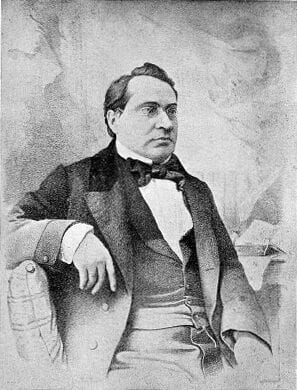
Kirkor's excavations revealed something entirely unknown until then: a large kurgan was discovered in Lentvaris, containing an exceptionally rare bronze urn suspended on chains within a niche made of porcelain tiles. Alongside it were weapons and equestrian gear: a sword, spears, spurs, a horse bit, and goads. Kirkor himself emphasized that urns of this type were considered a great rarity.
This discovery immediately shifted Lentvaris into a different layer of time. According to archaeological data, the burial dates back to the 12th–13th centuries—a period when political structures were already forming in the territory of Lithuania, battles were being fought, and roads and borders were being guarded. The nature of such isolated, wealthy burials suggests that the person interred here was no ordinary individual, but someone of great importance—perhaps a warrior or a local defense organizer.
This means one thing: Lentvaris, as a location, was significant long before the Tyszkiewicz family. And significant places always have names.
"Lantwere": When a Name Meant the Duty to Defend
A clue to the answer lies not in maps, but in chronicles. The 14th-century German chronicler Wigand of Magdeburg, when describing the territories of Lithuania and the defenses during the time of Vytautas, repeatedly mentions the term Lantwere—written with a capital letter. In the Latin text, this word is used as the specific name of a place or structure, while German glosses explain that Landwehr or Lantwere referred to fortifications: ditches, ramparts, and wooden or earthen barriers designed to protect state borders.
Wigand writes that Vytautas ordered such Lantwere to be guarded at the border. The historian Susan Reynolds also mentions lantwere in her works as a general medieval duty—to defend the land, and to build and maintain fortifications.
And here Lentvaris returns to the map. Trakai was one of the most important political centers of Lithuania. Lentvaris, situated nearby, might not have been a random settlement, but part of a defensive system—a place where ramparts and ditches were constructed, perhaps even temporary camps or guard posts.
In this case, Lentvaris is no longer "board" (lenta), nor "copper" (varis), nor merely a "manor" (dvaras). It could be a Lithuanian transformation of the ancient concept of Lantwere—a place whose function was to guard, to halt, to defend. A place where duty was more important than comfort.
In Conclusion
Today, Lentvaris is often perceived through the lens of its 19th and 20th-century industrial and manor history. However, beneath these layers lies a much older memory—kurgans, weapons, defensive terminology, and lines from chronicles. The city's name becomes not a random combination of sounds, but an encoded function that has survived through the centuries.
Perhaps this is exactly why Lentvaris still retains a strange gravity today—as if it were a place that always had to protect more than just itself.
- Maple Avenue
- The project "Intersections and Perspectives of the Cultural Heritage of the City of Lentvaris" is supported by the Press, Radio, and Television Support Foundation.