How We Can Now See What Was Never Photographed
In the second half of the 19th century, when Lentvaris Manor was experiencing its golden age, photography was still in its infancy. Although photographic technology already existed, it was slow, complex, expensive, and poorly suited for architectural landscapes. As a result, almost no high-quality, detailed photographs of Lithuanian manors from that period have survived that would allow us to clearly grasp their true appearance, scale, and surroundings.
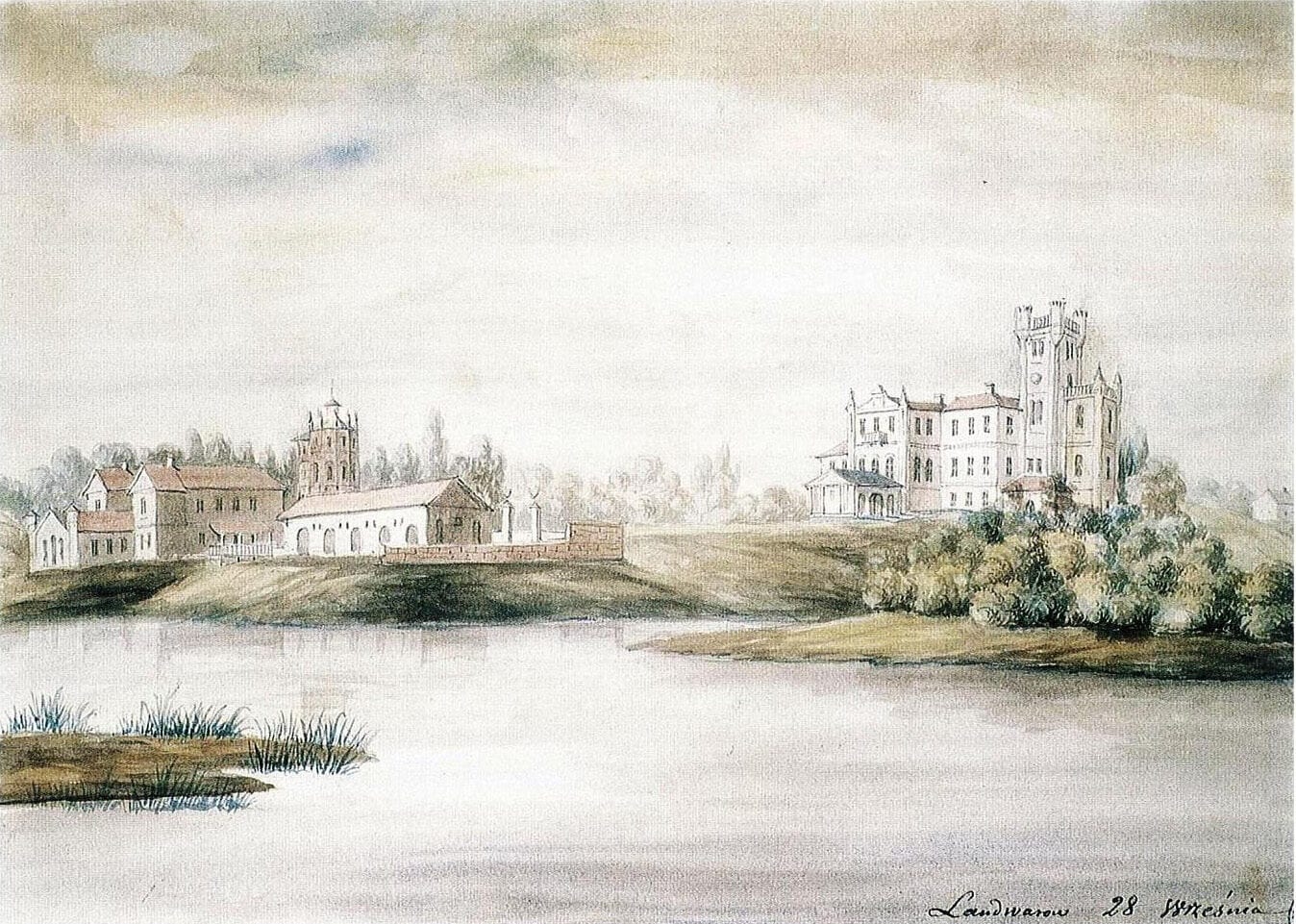
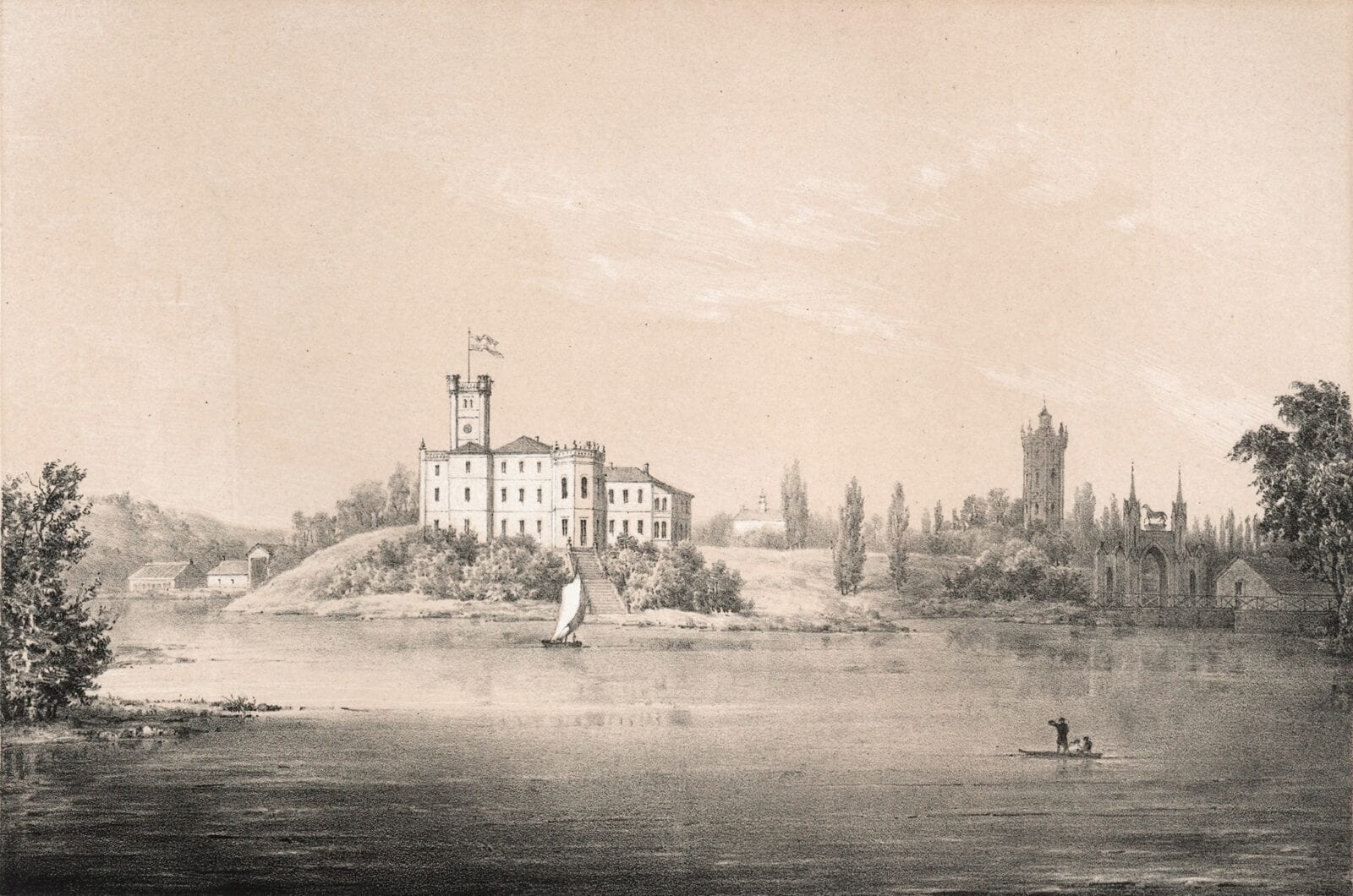
In the case of Lentvaris Manor, our visual memory has long relied on the drawings of the artist Napoleon Orda, created around 1875–1877. These are not romanticized fantasies, but highly accurate, documentarily valuable images that Orda produced while traveling through the territories of the former Polish-Lithuanian Commonwealth, recording significant architectural landmarks. To this day, his works are considered one of the most reliable visual sources regarding the appearance of 19th-century manors.
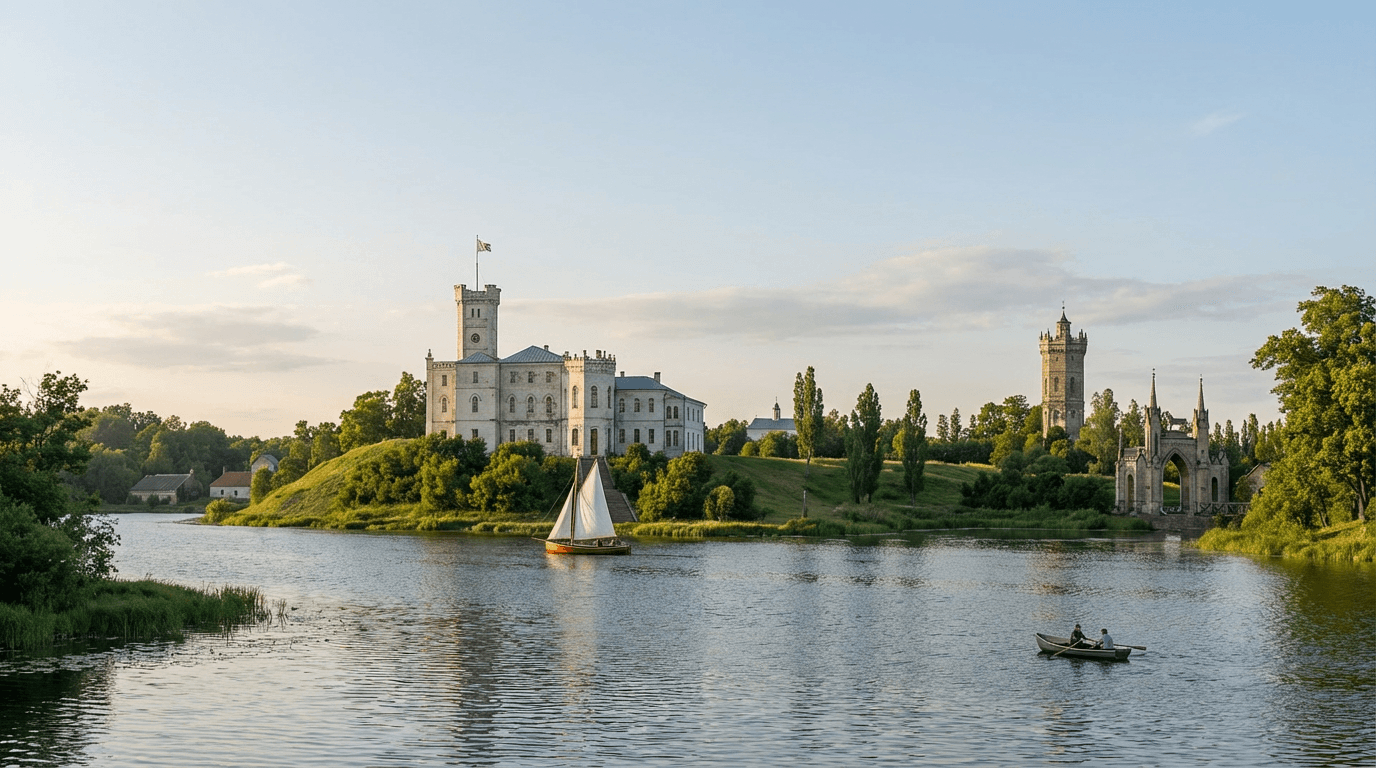
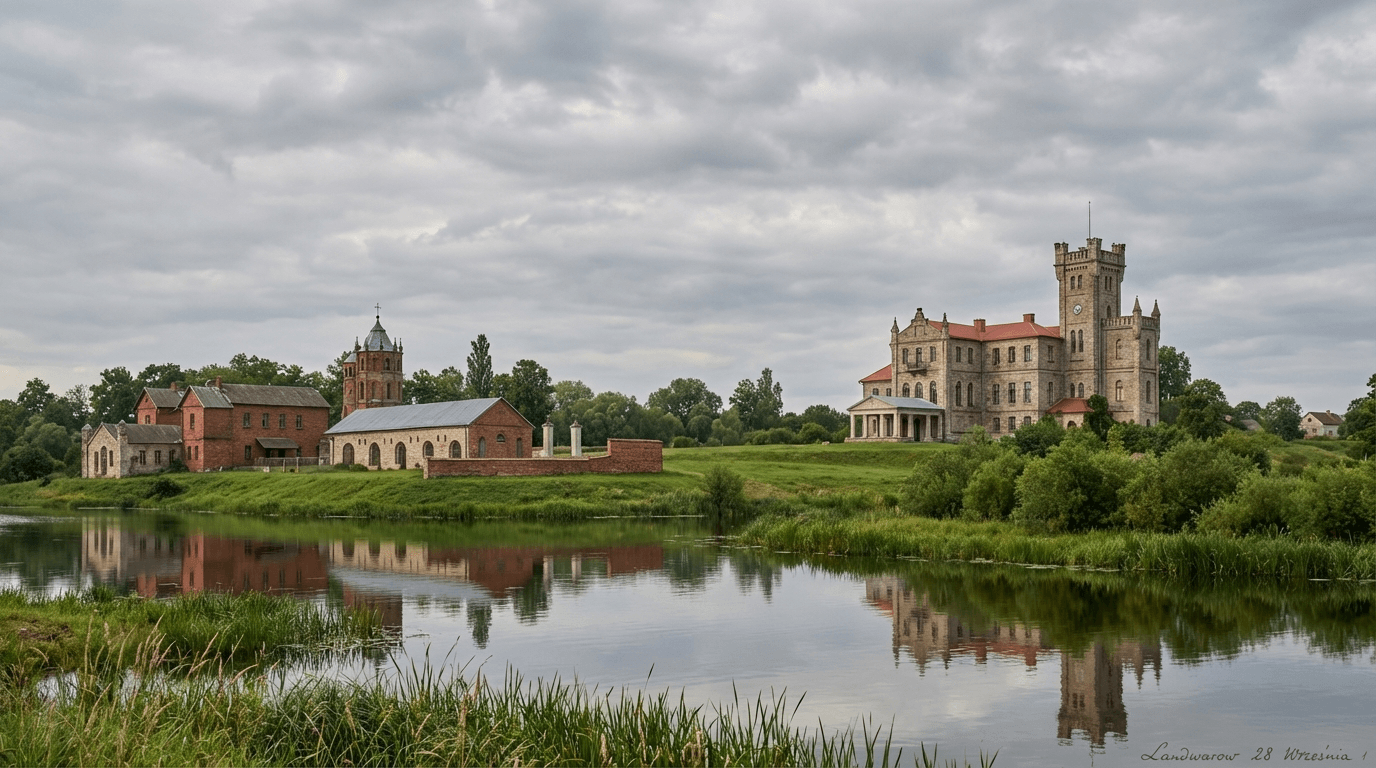
Today, living in the era of artificial intelligence, we have the opportunity to transform a historical drawing into a visually realistic image. Based on Napoleon Orda's original draft, architectural knowledge, the stylistic features of the era, and the logic of the environment, a realistic reconstruction was created. This allows us, for the first time, to look at Lentvaris Manor as it might have appeared in real life—with realistic proportions, lighting, water reflections, and landscape.
This is not a "fantasy" or a loose interpretation. It is a visual bridge between a historical source and modern perception. When authentic photographs do not exist, artificial intelligence becomes a tool not to invent a new history, but to help us see the old one.