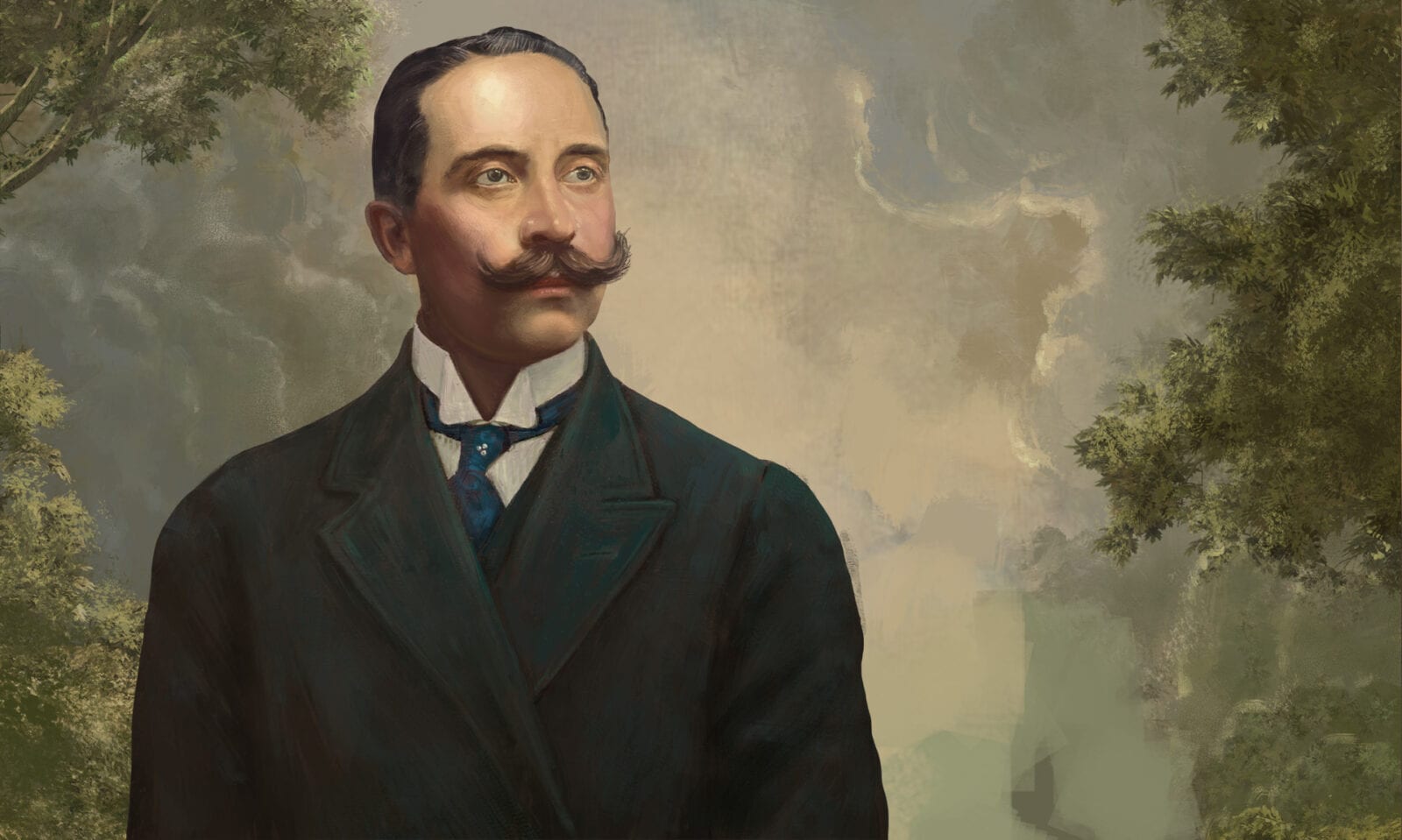
Count Vladislovas: When the Manor Became a Resort, and the Resort Became Destiny
The boy who handed out money as if it were the wind
Vladislovas Tyszkiewicz was born on June 26, 1865, in Kretinga—at the time, his parents, Juozapas and Sofija, were residing in an estate rented from the Counts Zubov. At first glance, this might seem like just another biography of a "count's son," but the moment you delve into it, you see an entirely different person. His sister Elena Klotilda remembered her brother as being friendly from a young age, frivolous with money, prone to borrowing, and spending it faster than others could even count. There is an episode that encapsulates Vladislovas's entire character in a single gesture: while out for a walk with his mother in Vilnius, he emptied all the money from his wallet into the hat of the very first beggar they encountered. Not "a portion," not "spare change," not "just enough to ease his conscience." Everything.
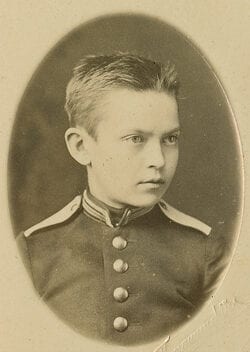
His father, evidently realizing that a good heart alone is not enough to build a life, sent his son to study in Saint Petersburg—to an exclusive gymnasium for the children of nobility and military officers. Vladislovas chose the path of law, graduating from the Imperial School of Jurisprudence in Saint Petersburg in 1886. He began his career as a trainee in the Ministry of Justice of the Russian Empire, later serving as a justice of the peace in Riga.
Yet, even within a highly structured system, he remained a man who valued the pulse of life over official duties. He loved spending his summers in Palanga, at his parents' estate, where another side of his nature suddenly blossomed—that of an organizer, director, and set designer. He became the driving force behind the resort's cultural events and theatrical performances, and from 1886, he edited the first humorous newspaper, La Limande (The Flounder), published in French via lithography. A lawyer with a flair for the stage. A civil servant with a taste for satire. A count who cared not just about his estates, but about the atmosphere.
And then came the photograph of a girl.
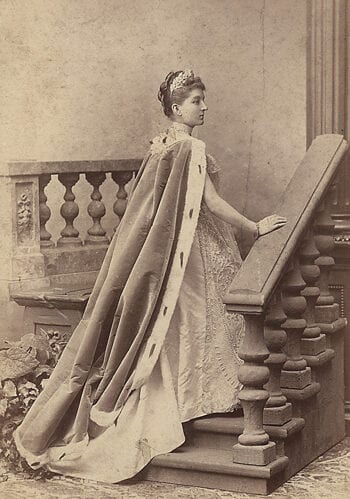
Vladislovas had befriended a peer, Prince Konstanty Lubomirski, and it was at his home that he saw a photograph of a charming young woman. It was a picture of the prince's sister, Kristina Marija Aleksandra. It is said that at first glance, she captured his heart so profoundly that he made up his mind: this girl would be his wife. First, he asked for the photograph and commissioned a special frame for it, complete with a small silk curtain—so that the face of his chosen one would be hidden from prying eyes.
Later, accompanied by his friend, he traveled to the Lubomirski residence in Kruszyna to ask for her hand in marriage. However, he had to wait quite a while for an answer: he would visit every month, proposing each time. It took four years of persistence before he gradually won over her parents' sympathies and Kristina's own heart. Christmas of 1891 brought their engagement. On April 25, 1892, they were married.
And from that moment, the Lentvaris that resonates as a legend today was born.
Lentvaris as a stage: the palace, the park, the town, the "Riviera," and even a dental cabinet
After the wedding, Vladislovas resigned from government service and settled with his wife at Lentvaris Manor—an estate inherited from his father, which became not merely a "property" to him, but a grand project. On February 7, 1893, they still managed to attend a New Year's carnival ball in Warsaw: Kristina Marija dressed as Empress Josephine, and Vladislovas as a Hungarian prince. She dazzled everyone with her elegance, but that very evening her contractions began, and the ball culminated in a different, more genuine celebration—the birth of their firstborn daughter, Sofija Rozalija Marija.
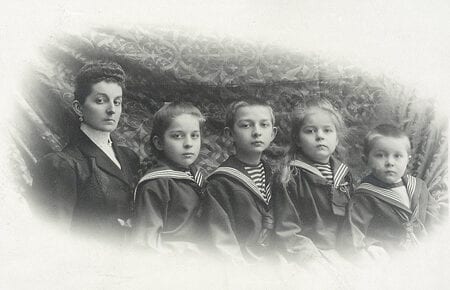
Their other children were also born in Warsaw: daughter Rozalija Natalija Marija, and sons Steponas Eugenijus Marija and Eugenijus Stanislovas Marija. Family life followed strict rules: before bed, the children would come to wish their parents goodnight, and their father would visit them before they fell asleep to make the sign of the cross over them. Even dining etiquette was a ritual: young children under the age of 8 or 10 were not allowed to sit at the main table with the adults, and once they earned the right to dine together, they were forbidden to speak unless answering a question. Afternoons were for walks, and three times a week, there were riding lessons. Later, the children were educated in Warsaw and elsewhere.
Most importantly, however, Vladislovas decided to transform Lentvaris into a family residence that would speak through its architecture. In 1899, following a design by architects de Wego and Tadeusz Rostworowski, he completed the reconstruction of the palace built by his father—it was reimagined in the English Neo-Gothic style, complete with a six-story tower. According to his sister, Vladislovas possessed an exquisite taste for art and over time became a true connoisseur: he purchased paintings and antiques, and while in Rome, he acquired antique furniture, paintings, artworks, and antiquities specifically for the interior of Lentvaris Manor.
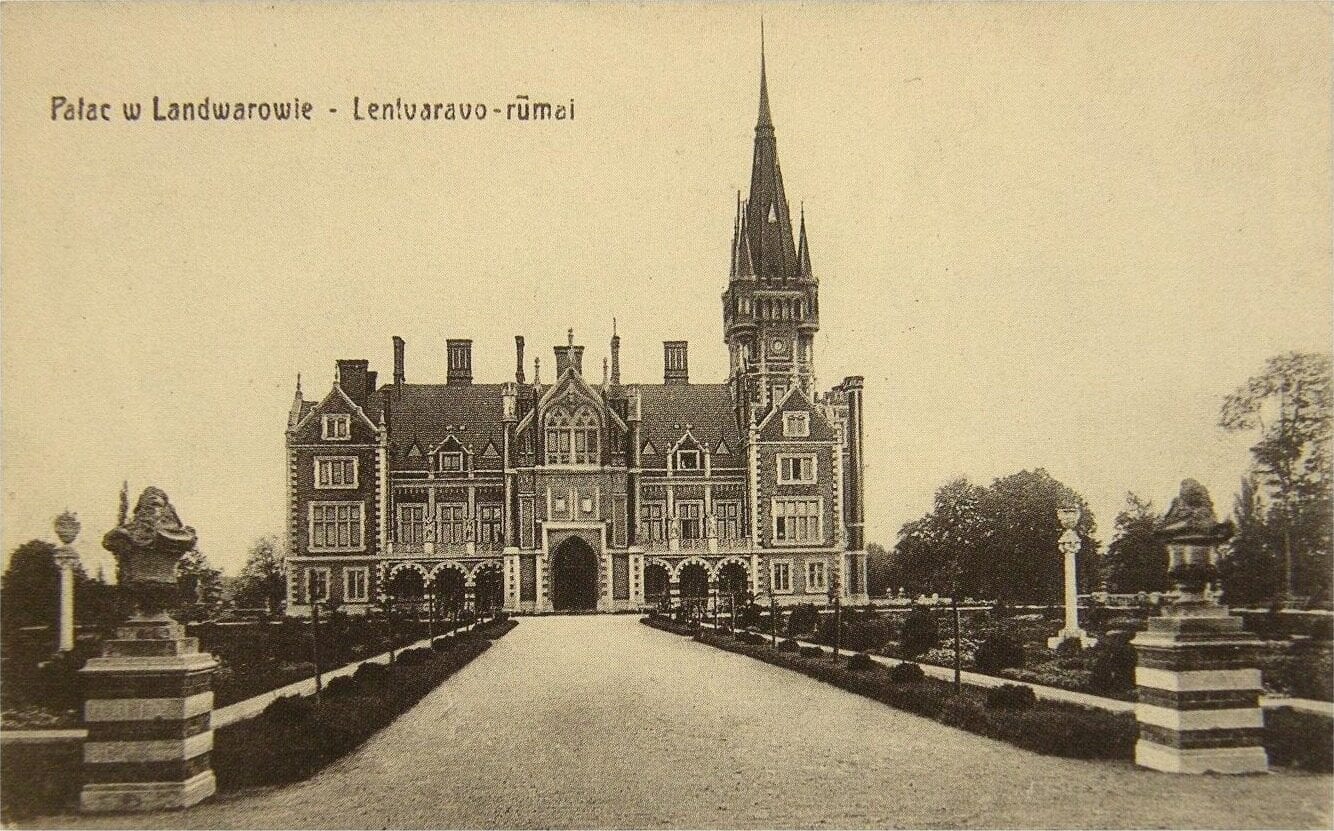
And then came the park. A landscaped world spanning over 12 hectares: a parterre, avenues, winding paths, play lawns, hills, a recreation area, cascading ponds and a waterfall, viaducts, and artificial grottoes. It was designed between 1898 and 1899 by the renowned French landscape architect Édouard François André and his son René. This was no mere "decoration," but an environment designed to shape the human spirit.
But for Vladislovas, refining what was "inside" was not enough. He set about developing a town near the railway station: first, he built a guesthouse with a restaurant, an event hall, and a stage, followed by a pharmacy, a post office, and several houses for workers. A Jewish community settled in the town, its core formed by migrants from Vilnius. The count transformed the pine forest between the town and the manor into a resort area: villas, sports grounds, tennis and cricket courts emerged, and on Sundays, an orchestra played in a rotunda built in the middle of the woods. Soon, Lentvaris became a beloved destination for summer vacationers, who flocked there with their families, mostly from Vilnius.
The most visited spot, however, was the "Riviera" café, nestled in the manor park by the lake. Boats were moored along the nearby embankment so visitors could go rowing. Inside the café, actors dressed in Neapolitan attire performed, sang Italian songs, and danced, with shows even taking place on a floating, spotlight-illuminated stage on the lake, reminiscent of St. Mark's Square in Venice. As the "Riviera" grew in popularity, a Summer Theater opened in the adjacent riding hall, featuring performances by actors visiting from Warsaw theaters.
And here lies a crucial detail that makes Vladislovas not just a "manor aesthete," but a man of action: alongside all this glamour, there was practical, humane infrastructure. In 1907, he opened a summer kindergarten where a teacher from Warsaw taught children handicrafts, drawing, catechism, the Polish language, and history. The manor had its own hospital, staffed by a medical doctor and a midwife-nurse, both maintained by the estate. And in the dental cabinet, the count himself treated teeth—he had acquired the qualifications of a dentist in Warsaw. It sounds almost unbelievable, but that was exactly the kind of person he was: a man who could simultaneously build a tower, direct a carnival, and fix teeth.
Another layer to his legacy was the church. In 1897, acting on behalf of the local people, Vladislovas petitioned the Russian authorities for permission to build a church in Lentvaris. After permission was granted in 1905, a wooden chapel was erected, and the design for a brick church, prepared by engineer A. Antonovich, was approved in 1910. Later, in 1926, Vladislovas and the parishioners finally completed the church.
The family spent their winters in Warsaw, where they owned two houses, hosting constant receptions and balls. According to their daughter Sofija, the countess was one of the most elegant ladies in Warsaw at the time, and they would travel to Vienna, London, or Paris for new wardrobes.
At the same time, Vladislovas was an active public figure: he participated in committees and societies, held leadership roles, spoke out against Russia's anti-Polish policies, and campaigned for the return of the Polish language to schools and the expansion of Polish rights. For this, he was exiled to the Arkhangelsk Governorate under police surveillance in 1904. Upon his return in 1906, he was elected as the representative of the Warsaw city district to the First State Duma of the Russian Empire. He spoke out against antisemitism, demanding an end to Jewish pogroms and an improvement in the legal status of Jews within the Russian Empire.
And then came one of the cornerstone achievements of his life: he became the founder of the Vilnius Museum of Science and Art. In 1906, alongside like-minded individuals, he established the Society of the Museum of Science and Art, which the authorities registered on October 16. From 1907, the museum operated in the palace of Countess Klementina Tyszkiewicz of Biržai (now the Wroblewski Library of the Lithuanian Academy of Sciences). It exhibited archaeological finds, numismatics, ethnography, manuscripts, books, artifacts valuable to the history of science, works by Western European artists, as well as paintings by Polish and Lithuanian artists. A significant portion of the exhibits came from his own donated collection of Western European paintings.
Exile, war, and departure: the palace kept its name, but froze in time
Vladislovas was distanced from the museum's activities against his will. In 1907, for speaking out against the autocracy, he was arrested, escorted to Kybartai, and deported to Germany without the right to return to Russia. From Germany, he traveled to Italy and settled in Milan, where his family soon joined him. There, he immersed himself in collecting, amassing a vast collection and opening an art gallery and antique shop in Milan called "Galleria Warowland"—an anagram of the Polish name for Lentvaris, "Landwarów." Even from afar, he never abandoned his home; he simply disguised it as a code.
He was only able to return to the Russian Empire in 1912, following an amnesty. Upon returning to Lentvaris, he did not close his antique shop in Milan—he continued to visit it until his death, organizing art auctions and exhibitions, while in Vilnius, he resumed his involvement in museum activities. In 1914, when the society merged with the Vilnius Society of Friends of Polish Science, he became a board member, and the museum's collections were transferred as a deposit to the Society of Friends of Science Museum.
The First World War changed everything in Lentvaris as well. Refugees streamed through the town toward the Russian interior, and the Tyszkiewicz family took them in and fed them. In 1914, a Red Cross hospital was established at the manor: the count allocated a building with 100 beds, along with facilities for provisions, fuel, and medicine. While the medical staff worked, the count himself pitched in—treating patients' teeth. His brother-in-law, Konstanty Lubomirski, assisted the surgeon, and his daughter Sofija initially prepared healing ointments in the pharmacy, later assisting in operations and caring for the severely wounded.
As the Germans approached in 1915, the headquarters of the 5th Corps of the Russian Army took over the palace, leaving the owners with only a few rooms. Valuable items were packed up and evacuated to Russia, where they vanished after the Bolshevik coup. Vladislovas buried some of the treasures on the estate and moved others to the Tyszkiewicz Palace in Vilnius. Appointed as an attending physician of the military hospital, the count retreated with the medical facility deep into Russia. Holding the rank of lieutenant colonel, he was appointed head of the Red Cross and sent to Iran. Then came a recall to Moscow by the Bolsheviks, a journey through Finland to Sweden, and finally, a return to Poland in 1918.
After the war, Lentvaris changed hands multiple times. In Warsaw, Vladislovas headed the Polish Red Cross and organized its operations; in 1919, he traveled to Kretinga to see his brother and visit his gravely ill mother. In 1922, the family returned to Lentvaris, only to find a different reality: the manor now sat on the administrative border separating the Polish-annexed Vilnius region from Lithuania. The manor homestead and part of the land were in Poland, while the rest of the estate lay in Lithuanian territory. The counts considered their stay in Lentvaris temporary and were in no rush to repair the war-damaged palace—they mothballed it and settled in an auxiliary residential building instead.
In 1932, Vladislovas fell ill with multiple sclerosis and lay paralyzed for four years, nursed by his wife and his loyal servant, Bolesław Lelewski. He died on September 21, 1936. His funeral was like a final procession directed by the man himself: a massive crowd, including representatives of the Jewish community and their rabbi, escorted the coffin from the palace, along the lake, to the church he had built. He was buried in the chapel next to the church. Three years later, the outbreak of the Second World War scattered the family, and his descendants never returned to the residence.
However, Vladislovas's story does not end with the date of his death. It culminates in what he left behind: Lentvaris as an idea, where a manor is more than just walls, and a person is more than just their duties. He may have been frivolous with money, but he was never frivolous with meaning. That is why today, Lentvaris remembers not only the palace, the park, or the "Riviera." It remembers a man who had the courage to live expansively—and to transform that expansiveness into a place.