A Manor Wedding: The Conversations Worth Having Before the Big Day
Most wedding plans start with a date and a place. After that come the guest list, the photographer, the flowers, the music and a hundred small decisions. Couples who come to Lentvaris Manor usually want to see the park, the lakeshore and the palace façade for themselves, because they would like the most important day of their lives to happen somewhere with a story of its own. This article covers what is worth knowing if you are planning a ceremony or a photo shoot at the manor, and also what no checklist covers: the conversations a couple should have before the big day.
Why couples choose the manor
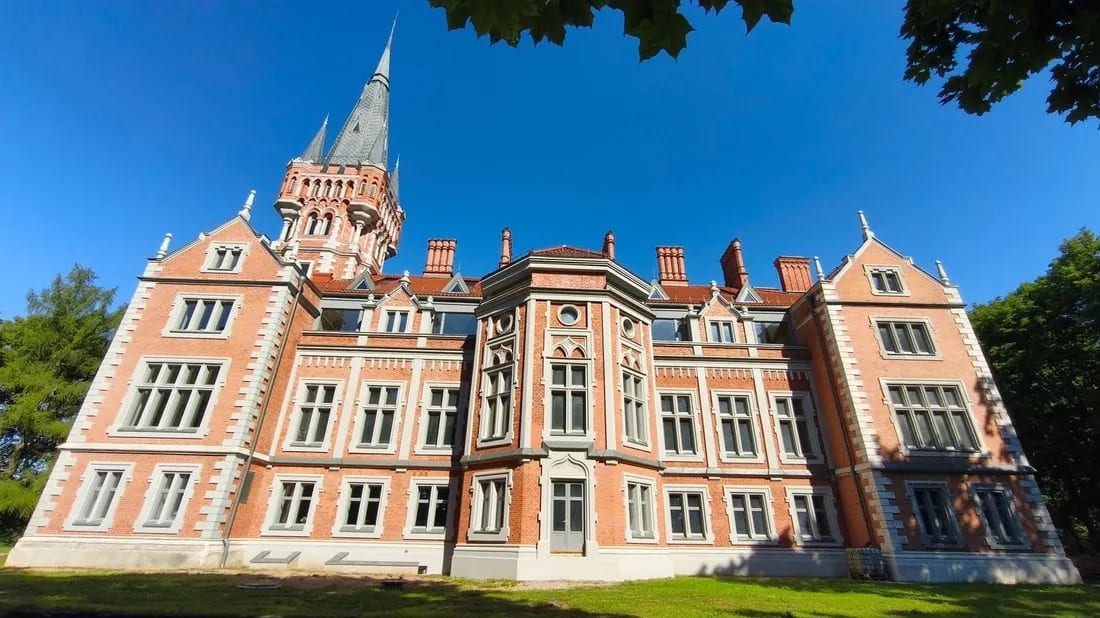
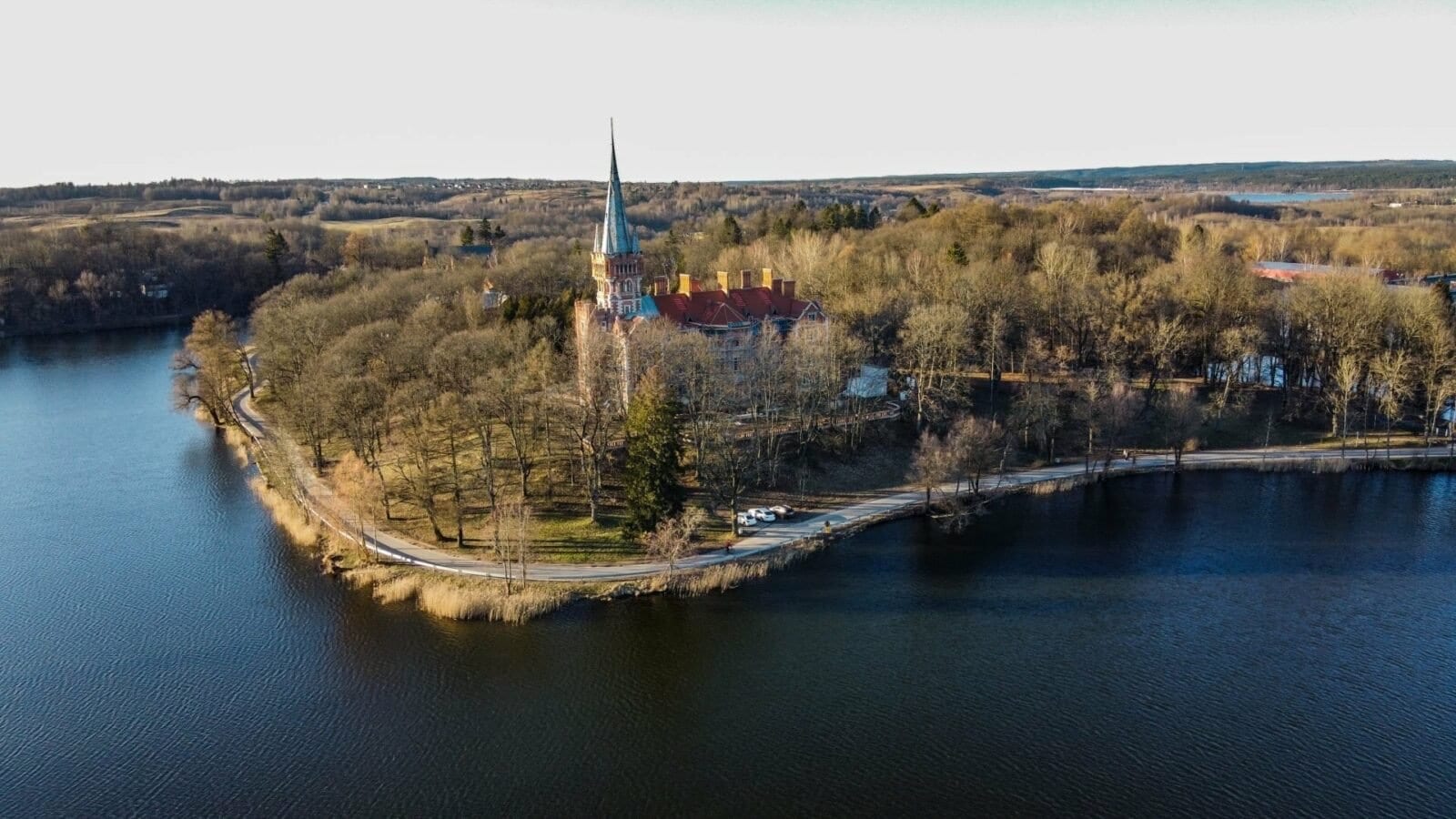
Lentvaris Palace stands on the northern shore of Lake Lentvaris, about half an hour's drive from Vilnius. It took on its present Gothic Revival look in 1899, when Count Władysław Tyszkiewicz had the residence rebuilt in the English neo-Gothic style. Red-brick façades, a slender spired tower and pale stone trim make a backdrop that needs very little decoration. Around the palace lies a 12.7-hectare park designed by the French landscape architect Édouard François André. Winding paths, avenues, clusters of old trees and open water mean that within a few minutes' walk you can find very different settings: an open lawn, a shaded avenue, a quiet stretch of shore.
For many couples the history matters too. The palace has been an aristocratic residence, has lived through two world wars, housed a Soviet carpet factory and then stood empty for years. Today it is slowly coming back to life. Marrying in a place that is itself in the middle of a second life feels meaningful to a lot of people.
The practical side: what to settle early
The manor offers a wedding ceremony in the park beside the palace, and separately a wedding or special-occasion photo shoot. A ceremony is booked for up to two hours and includes the ceremony spot in the park, set-up and clean-up, and a photo shoot afterwards. A photo shoot on its own is also up to two hours, for the couple, the witnesses and the photographer, in the park, along the avenues and by the lake.
A few things worth agreeing in advance:
- Date and time. Every service is by advance booking only, so that no tour or event is running at the manor at the same time. Time is counted from arrival to departure, including preparation and clearing up.
- The legal side. If you are not Lithuanian residents, check early with your own authorities and with the Lithuanian civil registry what is needed for a marriage to be legally registered. Many couples from abroad register the marriage at home and hold a symbolic ceremony in the park.
- Weather. The ceremony takes place outdoors, so have a plan for rain or wind: umbrellas for guests, spare time for photographs, comfortable shoes for the park paths.
- A heritage site under restoration. The palace is a protected cultural monument and work is still going on inside. The spaces open to visitors are arranged around that work, so what was possible last year may look different this year.
- Your guests. Think about older guests and small children: how far they will need to walk, where they can sit down and how long they will wait between the ceremony and the photographs.
Conditions and prices are on the services page, and the easiest way to agree a date is to call +370 661 54462.
Beyond the checklist: talking before you say yes
Wedding preparations have a way of swallowing everything. Couples can spend hours on the menu, the seating plan and the colour of the napkins and still never sit down for a calm conversation about how they will live once the party is over. Yet those conversations shape a marriage far more than any detail of the day itself.
The practical questions usually come first: how you will handle money, whether you want children and when, where you will live, how you will fit two careers and two sets of plans together. Most couples touch on these at least briefly. What is harder to talk about is what each of you learned at home. How was love shown in your family? Were problems discussed out loud or quietly avoided? Who apologised first, and did anyone apologise at all? Habits like these slip into a marriage unnoticed, and many arguments a few years in are not really about the washing-up but about two sets of family rules that nobody ever put into words.
It also helps to ask each other about needs. What do I need when I am tired or upset? How much time do I want on my own or with friends? What would I like to do differently from my parents? These questions are not a test to pass. They simply show you in advance where you might collide, and give you the chance to agree what you will do when it happens.
How you start matters as well. Pick a calm moment, not the evening after a hard day at work and not the most frantic week of wedding planning. A walk often helps: side by side, it is easier to talk about sensitive things than face to face across a table. If an answer surprises or worries you, that is not necessarily a bad sign. It is better to find out now, while there is time to talk it through.
If you would like a ready list to work through together, Ema Sakalauskaitė has gathered the questions worth asking before marriage, with advice on how to ask them so the conversation does not turn into an interrogation:
A wedding gift that became part of the manor's story
Lentvaris has a wedding story of its own. Count Władysław Tyszkiewicz married Princess Maria Krystyna Lubomirska, from one of the best-known princely families of Poland. Their marriage is still recorded on the palace façade in the carved coats of arms of the two families.
As a wedding present, the Lubomirski brothers gave the couple a foundation stallion and four mares brought from England. In 1893 the countess founded a stud farm at Lentvaris, and by 1900 it had grown to a hundred horses. A wedding gift became years of work and part of everyday life on the estate. Perhaps that is a good reminder for couples today: the most important part of a wedding is what begins after it.
When two families meet
A wedding brings together two families as well as two people. Often it is the first time parents, grandparents, brothers, sisters and cousins find themselves in one group, having only seen each other in photographs. Think beforehand about who will greet guests on arrival, who will show them where to go, and who will look after older relatives while you are busy with the photographer.
It is worth talking through your families' expectations too. Some parents hope for traditional customs, others would prefer something as simple as possible. One grandmother will want to be in every picture, another would rather sit quietly in the shade. If the two of you discuss this early and agree what you will say, you will not have to settle surprise disagreements on the day. One simple rule works for many couples: each of you answers your own parents, kindly but clearly.
With the photographer, draw up a short list of the must-have shots: which family groups have to be photographed and who stands with whom. In a park, groups scatter quickly, so a clear list saves time and nerves and leaves you more minutes alone together by the lake.
How a day at the manor usually runs
The day usually begins with arrival and a short look around. While guests gather, the ceremony spot in the park beside the palace is already prepared. After the ceremony the photographer has time for the couple and their closest people in the park, along the avenues and by the water. Guests who have never been to the manor might enjoy a guided tour of the palace another day: in about an hour and a half they will see the palace halls, the tower and the park and hear the manor's history. Tours in English can be arranged.
Photographers should come a little early to look at the light. The sun falls on the façade very differently in the morning and in the evening, and by the lake the evening light is especially soft. It also helps to know in advance which areas will be closed off for restoration that day.
How to book
Call +370 661 54462 and tell us what you are planning: a ceremony, a photo shoot or both. We will suggest which part of the manor suits you best and reserve the time. The ceremony price is agreed individually; the photo shoot price is listed on the services page.
And one last piece of advice: once the date, the flowers and the music are settled, set aside one quiet evening just for the two of you to talk. The wedding lasts a day. What you learn about each other that evening can serve you for a lifetime.